A remote work setup is no longer just a convenience, it has become a standard way of working for millions of professionals around the world.
Whether you are freelancing, working full-time from home or managing a hybrid role, your environment plays a direct role in your productivity and focus.
A poorly arranged workspace leads to discomfort, distractions and reduced efficiency, while a well-planned setup improves both mental clarity and output.
This guide explains everything about building an effective remote work setup in a practical and structured way. You will learn what it means, how to design it, what tools are required and how to avoid common mistakes that reduce productivity.
What is a Remote Work Setup and Why It Matters
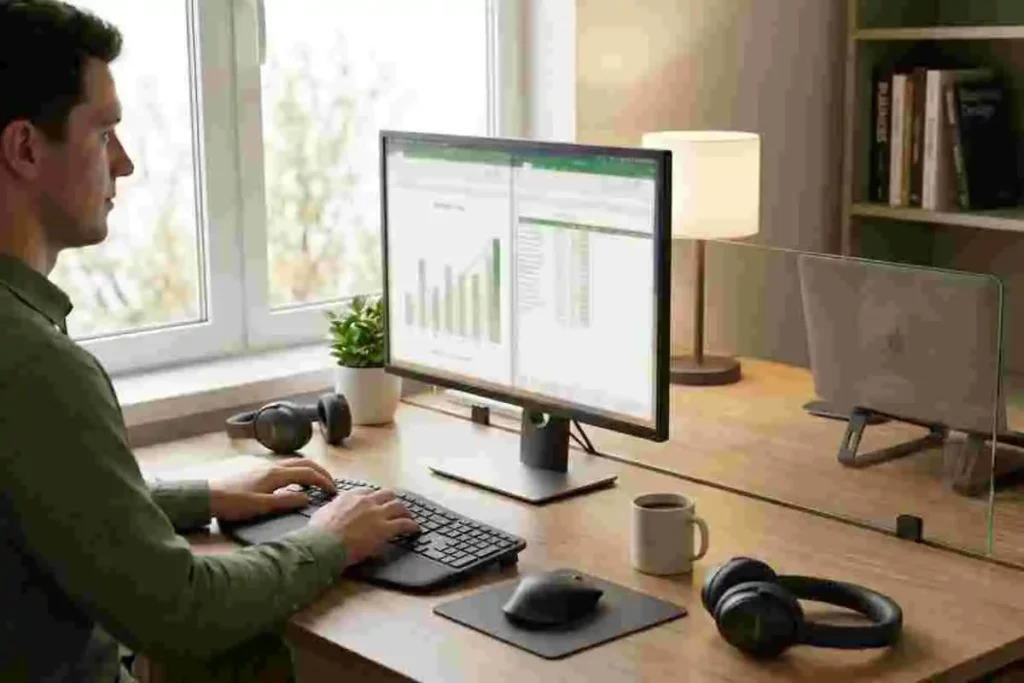
A remote work setup refers to the complete arrangement of tools, furniture, technology and environment that allows a person to work efficiently from a non-office location.
The term remote work setup meaning goes beyond just having a laptop and internet connection. It includes ergonomics, software systems, communication tools and even psychological comfort that supports long working hours.
In modern work culture, a strong remote work setup office setup is essential because companies rely heavily on virtual collaboration.
Tools like video conferencing, cloud storage and project management platforms require stable hardware and a distraction-free environment. Without these elements, productivity drops significantly and work quality suffers.
The importance of a proper setup is also connected to health. Poor seating or incorrect monitor height can cause long-term issues such as neck strain and back pain.
This is why ergonomic setup remote work practices are widely recommended by professionals and health experts.
According to research published by Harvard Business Review, employees with optimized home offices report higher focus and lower fatigue levels, which directly improves output quality. You can explore related workplace studies at hbr for deeper insights.
A well-designed setup is not only about comfort but also about building a boundary between personal life and work life. This separation is critical for maintaining mental balance in remote working environments.
According to research from Microsoft Work Trend Index, remote and hybrid workers perform better when they have structured digital systems and a well-organized workspace, highlighting the importance of a proper remote work setup for long-term productivity.
Essential Components of a Remote Work Setup
A complete remote working setup depends on multiple interconnected elements that work together to create efficiency. The foundation starts with physical equipment such as a desk, chair and computer.
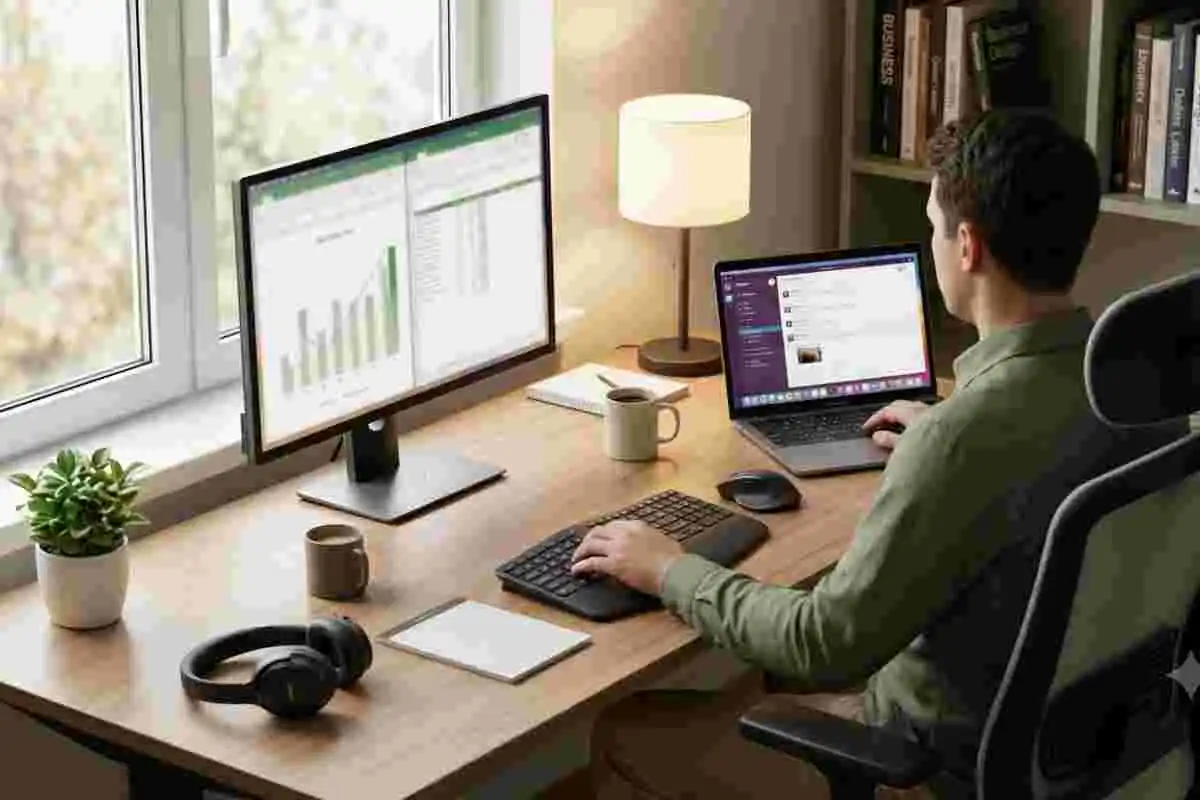
A remote work desk setup should always prioritize comfort and posture alignment. The chair must support the lower back, while the desk should allow arms to rest naturally at a 90-degree angle.
Technology also plays a major role in modern setups. A reliable internet connection is non-negotiable because most remote tasks depend on real-time communication and cloud-based systems.
This is especially important for professionals working in fields like design, programming or remote customer support.
Another key part is software integration. Remote work setup software includes tools like Slack, Zoom, Google Workspace and Asana, which help teams collaborate effectively across distances.
For more advanced system-based workflows and productivity tools, users can also explore Wizarr Guide, which helps in managing self-hosted setups and digital environments. Without these tools, coordination becomes slow and inefficient.
The best remote work setup also includes proper lighting and audio equipment. Good lighting reduces eye strain during long hours of screen use, while a quality microphone or headset improves communication clarity during meetings.
When all these elements are combined, the workspace becomes more efficient, organized and suitable for long-term productivity.
A real-world remote work setup can look different depending on the job role. For example, a freelance content writer may use a laptop, dual monitor setup, Google Docs for writing, Grammarly for editing and Trello for managing client tasks.
This combination helps in maintaining productivity and handling multiple projects efficiently from a single workspace.
Ergonomic Remote Work Setup for Health and Productivity
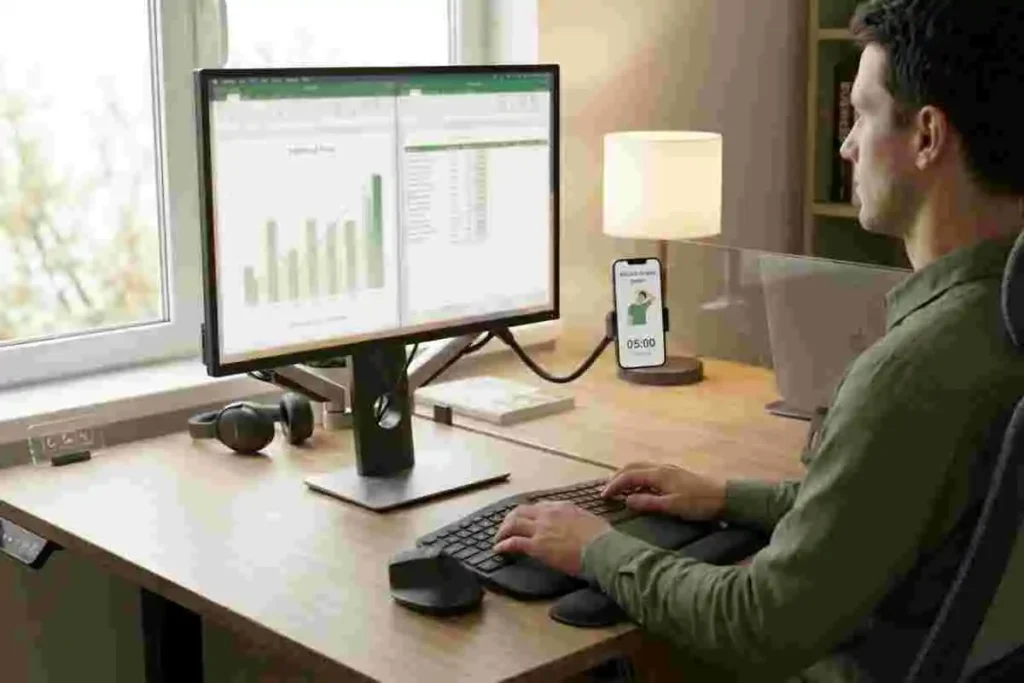
An ergonomic setup remote work environment focuses on reducing physical stress while improving performance. Many professionals underestimate the importance of ergonomics until they experience discomfort or pain caused by long hours of sitting.
A best ergonomic home office setup for remote work typically includes an adjustable chair, a properly positioned monitor and accessories that support natural posture.
The monitor should be placed at eye level to avoid bending the neck forward. The keyboard and mouse should be positioned in a way that keeps wrists straight and relaxed.
This reduces the risk of repetitive strain injuries, which are common among remote workers. The use of standing desks has also increased as they allow users to alternate between sitting and standing positions throughout the day.
Ergonomics is not just about furniture, it also includes workflow habits. Taking short breaks, stretching and adjusting posture regularly helps maintain energy levels. Over time, these small adjustments significantly improve focus and reduce fatigue.
A well-planned ergonomic system is especially important for people working long hours in fields like IT, content writing or customer service. It ensures that productivity is maintained without compromising physical health.
Digital Tools, Software and Remote Work Systems
Modern remote work depends heavily on technology. Remote work setup software plays a critical role in ensuring smooth communication and task management. Without these systems, remote teams would struggle to coordinate effectively.
Popular tools include communication platforms, cloud storage systems and project management software. These tools allow employees to share files, track progress and communicate in real time regardless of location.
Remote work setup jobs often require familiarity with these platforms, especially in industries like marketing, software development and virtual assistance.
There are also technical challenges related to setup configuration. For example, issues like spectrum remote setup not working reflect how even basic connectivity or device integration can affect productivity. Troubleshooting such problems becomes part of maintaining a stable remote environment.
In addition, specialized setups exist in certain regions, such as remote work set up in Los Angeles, where companies provide structured IT infrastructure for distributed teams. These setups ensure security, fast connectivity and seamless system access.
Overall, the right combination of tools creates a digital ecosystem that supports collaboration, efficiency and long-term scalability.
Best Practices for an Efficient Remote Work Setup
Creating a productive workspace requires more than just buying equipment. The cost of a remote work setup can vary widely depending on quality and requirements.
A basic setup may cost around 200 to 500 dollars, while a more advanced professional setup with ergonomic furniture, multiple monitors and premium tools can exceed 1000 dollars. It involves planning, discipline and continuous improvement. The best remote work setup is one that evolves with your workflow needs.
A key practice is maintaining a dedicated workspace. This helps the brain associate a specific area with productivity, improving focus over time. Another important factor is minimizing distractions. A clean and organized environment reduces mental clutter and improves efficiency.
Remote workers should also focus on lighting and environment quality. Natural light is ideal, but artificial lighting should be soft and evenly distributed. Temperature control also plays a subtle but important role in maintaining comfort during long working hours.
Another growing trend is flexible living arrangements such as furnished apartments for digital nomads with remote-work setups.
These spaces are designed specifically for remote professionals and include ready-to-use desks, high-speed internet and ergonomic furniture.
Ultimately, consistency is the key. A good setup is not just about design but about maintaining habits that support long-term productivity.
Trends, Challenges and Real-World Applications
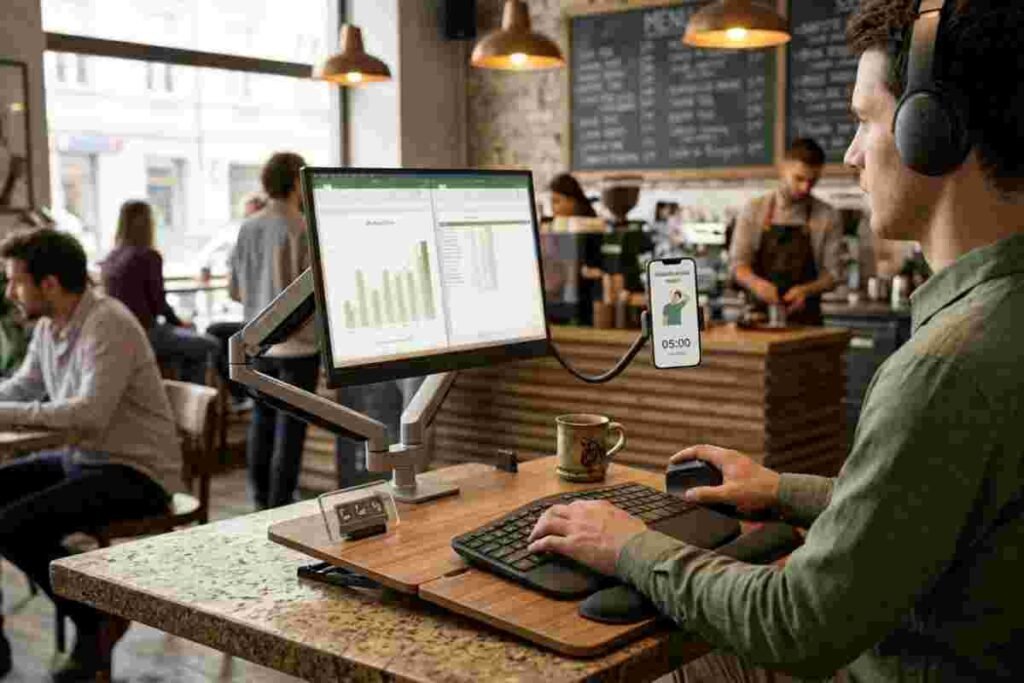
Remote work continues to evolve and with it, the expectations for work environments are also changing. One of the emerging trends is portable remote work setup solutions.
Professionals now prefer lightweight, mobile equipment that allows them to work from multiple locations, including cafes, co-working spaces and travel destinations.
However, challenges still exist. Not everyone has access to ideal workspace conditions and many professionals struggle with noise, poor internet or limited space.
This is where adaptable solutions become important. For example, compact desks, noise-canceling headphones and cloud-based tools help overcome these limitations.
Communities like Remote work set up reddit discussions show how people continuously share real-world solutions and experiences. These insights often help new remote workers improve their setups without unnecessary spending.
Interestingly, even unrelated queries like Remote work setup briefly crossword clues show how widely the term has entered everyday language, reflecting its growing cultural relevance.
As remote work becomes more common, companies and individuals are investing more in optimized environments that balance comfort, efficiency and mobility.
Conclusion
A strong remote work setup is essential for maintaining productivity, comfort and long-term professional success. It combines ergonomic design, digital tools and disciplined work habits into a single efficient system.
As remote work continues to grow globally, having a structured setup becomes more important than ever.
By investing in the right environment and tools, professionals can create a workspace that supports both health and performance. A well-planned setup is not just a workspace, it is a productivity system that evolves with your career.
As remote work continues to grow globally, having a properly designed setup is no longer optional. It has become a key factor in career growth, efficiency and long-term professional success in modern digital workplaces.
FAQ’s
What is a remote work setup?
A remote work setup refers to the complete system of tools, furniture and digital platforms that allow a person to work efficiently outside a traditional office. It includes physical workspace design, internet connectivity and software tools that support communication and productivity. A proper setup ensures comfort and efficiency during long working hours.
What is the best remote work setup for beginners?
For beginners, the best approach is to start with essential items such as a comfortable chair, stable desk, reliable internet and a basic computer setup. Over time, additional tools like external monitors, ergonomic keyboards and productivity software can be added to improve efficiency and comfort.
How important is ergonomics in remote work?
Ergonomics is extremely important because it directly affects health and productivity. Poor posture or improper equipment setup can lead to long-term issues such as back pain or eye strain. An ergonomic workspace helps maintain proper body alignment and reduces physical stress during long work sessions.
What software is needed for remote work?
Remote work typically requires communication tools like Zoom or Slack, file-sharing platforms like Google Drive and project management tools like Asana or Trello. These tools help teams collaborate effectively and maintain workflow consistency across different locations.
Can remote work setups be portable?
Yes, portable setups are becoming increasingly popular. Many professionals use lightweight laptops, compact accessories and mobile internet solutions to work from different locations. This flexibility is especially useful for digital nomads and hybrid workers.
How do I fix remote setup issues?
Common issues like connectivity problems or device configuration errors can usually be solved by checking internet stability, updating software or resetting devices. For example, troubleshooting guides often help resolve issues like remote setup software errors or device syncing problems.