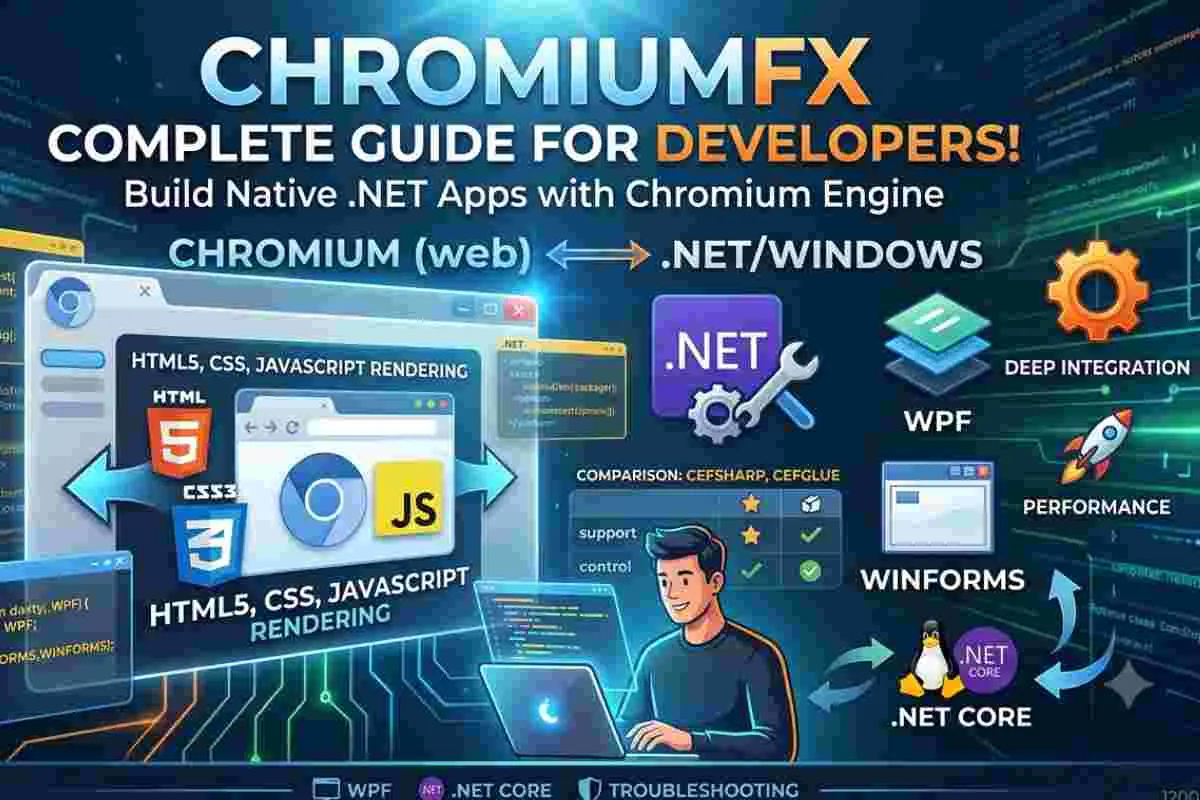
I have been working with different .NET browser embedding tools for a while and ChromiumFX is one of those frameworks that always comes up when you need to bring a real Chromium engine inside a desktop application.
In simple terms, it lets you use chromiumfx to build apps that feel like modern web applications but still run natively on Windows or .NET environments like WPF and WinForms.
What I noticed while exploring it is that developers don’t just use it for basic rendering, but also for deeper integration with web technologies like HTML5, CSS and JavaScript inside desktop software.
It often gets compared with tools like CefSharp and WebView2, especially in topics like chromiumfx wpf, chromiumfx net core and chromiumfx mono linux.
In this guide, I will break down Chromium FX in a practical way based on real usage scenarios, common issues and how it fits into modern .NET development so you can clearly understand where it actually makes sense to use it.
What is ChromiumFX?
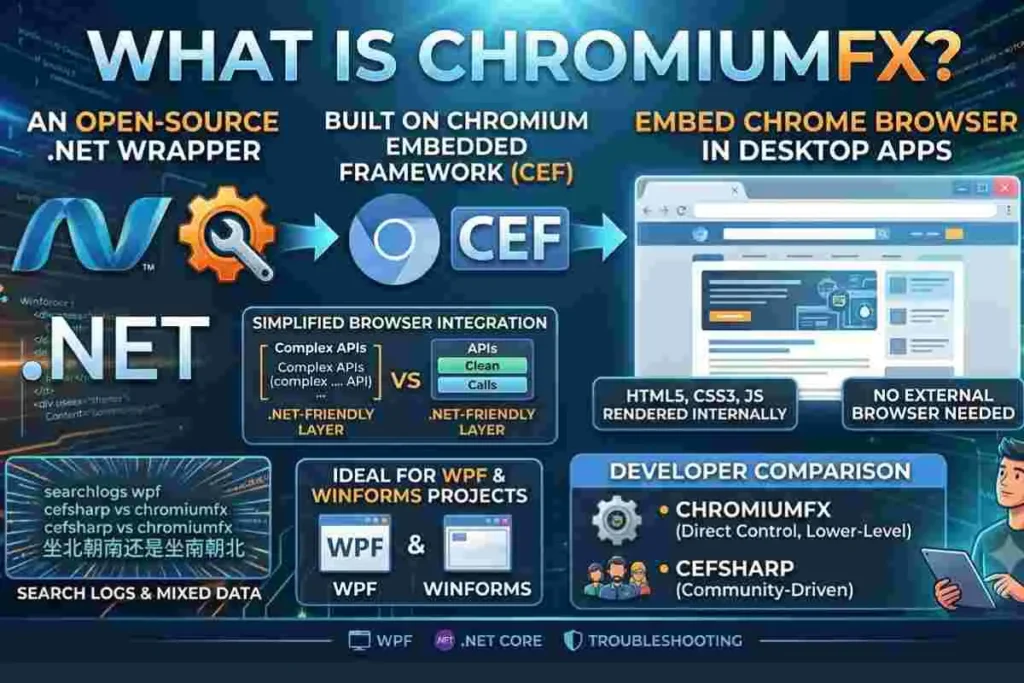
ChromiumFX is an open-source .NET wrapper built on top of the Chromium Embedded Framework (CEF). Its main purpose is to allow developers to embed a fully functional Chromium browser into desktop applications.
This means you can render modern web pages inside Windows-based applications without relying on external browsers.
At its core, Chromium FX is designed to simplify browser integration. Instead of directly handling complex CEF APIs, developers interact with a more structured .NET-friendly layer.
This makes it especially useful for projects involving chromiumfx wpf or WinForms-based applications where UI flexibility is important.
In many developer discussions, Chromium FX is also compared with cefsharp chromium fx implementations because both serve similar purposes.
However, Chromium FX focuses more on direct control and lower-level integration, while CefSharp offers a more community-driven approach. Developers often search for terms like chromiumfx cefsharp or cefglue vs chromium fx when deciding between these frameworks.
Interestingly, some unrelated search queries like “坐北朝南还是坐南朝北” sometimes appear in SEO logs alongside technical terms, showing how mixed search behavior can be in global data tracking systems.
Overall, Chromium FX serves as a powerful bridge between desktop software and modern web rendering engines, enabling hybrid application development with ease.
ChromiumFX Installation and Setup
Before using ChromiumFX, developers need to properly set up the environment and dependencies.
- Install Visual Studio (recommended 2017 or later)
- Add ChromiumFX NuGet package or DLL references
- Download required CEF (Chromium Embedded Framework) binaries
- Match architecture (x86 or x64) with your project
- Ensure .NET Framework or .NET Core compatibility is correctly configured
Once setup is complete, ChromiumFX can be initialized inside WPF or WinForms applications.
How ChromiumFX Works (Architecture and Core Design)
ChromiumFX works by embedding the Chromium engine inside .NET applications using a structured communication layer.
The framework relies heavily on the Chromium Embedded Framework, which handles rendering, JavaScript execution and browser process management.
When a developer uses Chromium FX, the application initializes a browser instance that runs as part of the desktop environment. This allows real-time rendering of web content inside a native window.
Communication between the application and browser engine happens through managed .NET wrappers, making it easier to handle events and browser actions.
In environments like chromiumfx net core or chromiumfx mono linux, developers attempt to run these applications across different platforms. However, compatibility may vary depending on system configuration and CEF support.
Similarly, experimental discussions around chromiumfx ios and chromiumfx xamarin highlight attempts to extend browser embedding into mobile or cross-platform ecosystems.
The architecture also supports event-driven programming, which is useful when handling rendering callbacks. However, issues like chromium fx not calling onpaint sometimes arise when rendering events are not properly initialized. These problems usually relate to incorrect event binding or lifecycle mismanagement.
Overall, Chromium FX acts as a wrapper layer that simplifies direct interaction with Chromium while maintaining high performance and flexibility.
For deeper technical reference, Chromium Embedded Framework documentation can be explored here: bitbucket.org/chromiumembedded/cef
Platform Compatibility of ChromiumFX
ChromiumFX supports different environments with varying levels of stability:
- Windows (.NET Framework) → Fully supported and stable
- Windows (.NET Core) → Supported with configuration
- Linux (Mono) → Experimental and limited support
- Xamarin → Experimental and not production-ready
Key Features of Chromium FX
Chromium FX provides a wide range of features that make it suitable for desktop and hybrid application development. One of its most important capabilities is full Chromium-based rendering, which ensures that modern web pages display correctly inside applications.
Developers using chromium fx wpf benefit from seamless integration with Windows Presentation Foundation, allowing them to embed web-based UI components directly into desktop windows.
Similarly, chromium fx xamarin discussions focus on cross-platform mobile development, although implementation can be complex.
Another major feature is JavaScript execution support, which enables dynamic interaction between backend .NET code and frontend web scripts. This is especially useful in enterprise dashboards and internal tools.
Chromium FX also supports customization of browser behavior, giving developers control over navigation, cookies and event handling. This level of control is often compared in chromiumfx vs cefsharp discussions, where developers evaluate flexibility versus ease of use.
Performance optimization is another key advantage. Even with heavy HTML5 content, Chromium FX maintains stable rendering when properly configured.
However, developers sometimes face issues such as chromium fx not loading correctly in unity2017, which usually indicates dependency or compatibility problems.
In addition, advanced developers sometimes explore chromiumfx c level integrations for deeper system-level optimization, although this requires strong C++ and .NET knowledge.
ChromiumFX vs CefSharp and CefGlue Comparison
Developers often compare ChromiumFX with CefSharp and CefGlue before selecting a framework for their project. Each tool has unique strengths depending on project requirements.
| Feature | ChromiumFX | CefSharp | CefGlue |
| API Complexity | Medium | Low | High |
| Performance Control | High | Medium | High |
| Community Support | Low | Very High | Medium |
| Ease of Use | Moderate | Easy | Complex |
| Flexibility | High | Medium | High |
When evaluating cefglue vs chromiumfx, developers often prefer Chromium FX for deeper control over rendering processes. However, CefSharp is more popular due to better documentation and active community support.
In chromiumfx cefsharp comparisons, the decision usually depends on whether developers prioritize customization or ease of integration. Chromium FX offers more flexibility but requires more setup effort.
Using ChromiumFX for WPF Applications
Basic ChromiumFX WPF Initialization Example:
var browser = new ChromiumWebBrowser("https://example.com");
this.Content = browser;

This simple example shows how ChromiumFX can be embedded directly inside a WPF window to render web content.
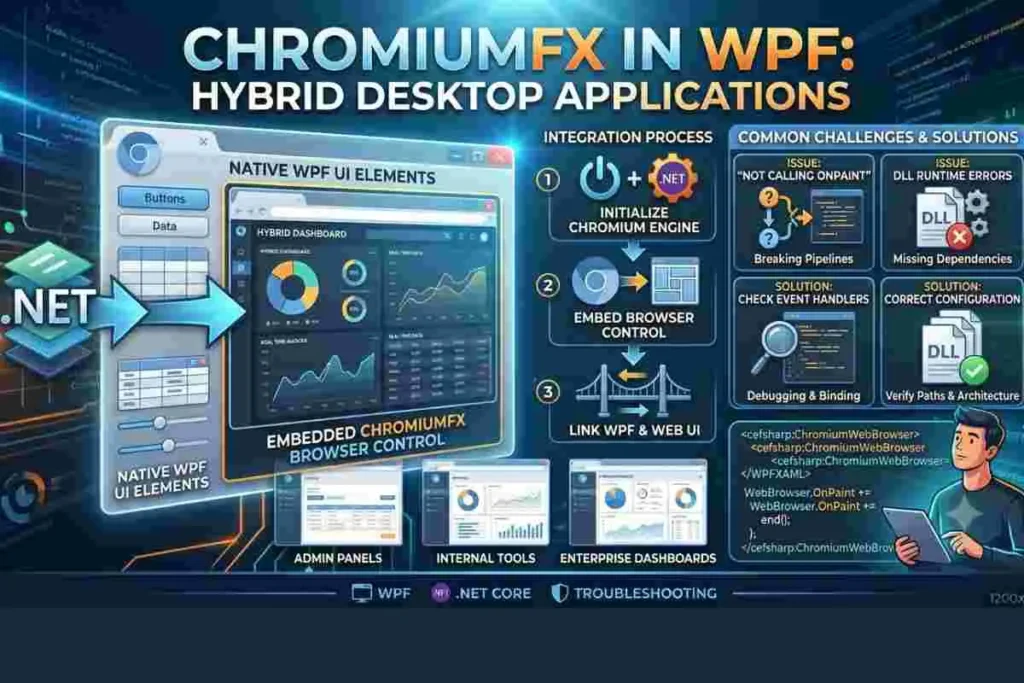
ChromiumFX is widely used in WPF applications where developers need to combine web technologies with desktop interfaces. The process of using chromium fx for wpf involves initializing the Chromium engine, embedding the browser control and linking it with WPF UI components.
In typical chromium fx wpf projects, developers create hybrid dashboards, admin panels and internal business tools. These applications benefit from modern UI rendering while maintaining native system performance.
However, developers sometimes face challenges during integration. Issues such as chromium fx not calling onpaint can break rendering pipelines, requiring careful debugging of event handlers. Additionally, correct configuration of DLL files is essential to avoid runtime errors.
Despite these challenges, WPF integration remains one of the strongest use cases for Chromium FX due to its flexibility and rendering capabilities.
ChromiumFX in WinForms Example:
ChromiumWebBrowser browser = new ChromiumWebBrowser("https://example.com");
this.Controls.Add(browser);
browser.Dock = DockStyle.Fill;
Common Errors and Troubleshooting in Chromium FX
While Chromium FX is powerful, developers often encounter technical issues during implementation. One common problem is chromium fx dll not load correctly in unity2017. This typically occurs due to missing dependencies, incorrect runtime versions or architecture mismatches between system and libraries.
Another frequent issue is chromium fx not calling onpaint, which affects rendering output. This usually happens when browser events are not properly initialized or when lifecycle methods are incorrectly implemented.
Cross-platform discussions such as chromium fx mono linux highlight additional compatibility challenges. Linux environments require proper Mono configuration and dependency handling.
Troubleshooting Chromium FX generally involves verifying library paths, ensuring correct CEF versions and reviewing application startup sequences. Developers often rely on performance analysis tools to detect rendering delays and system-level issues in such frameworks.
Developers working in complex environments like chromium fx net core must also ensure runtime compatibility across platforms.
Advanced Troubleshooting in ChromiumFX
DLL Load Errors
Ensure correct architecture (x86/x64) and missing CEF files are included.
Black Screen Issue
Usually caused by missing render process initialization or incorrect browser lifecycle setup.
onPaint Not Triggering
Check event bindings and ensure browser instance is fully initialized before rendering.
CEF Version Mismatch
Always match ChromiumFX version with correct CEF build.
Projects Made with Chromium FX
Example Real-World Use Case:
A common ChromiumFX project is an internal enterprise dashboard application where:
- UI is built in WPF
- Data is rendered using HTML/JS
- ChromiumFX acts as bridge between UI and web layer
This allows developers to build modern hybrid desktop applications without using a full web browser separately.
Many projects made with Chromium FX demonstrate its flexibility in real-world applications. Developers use it to build custom browsers, enterprise dashboards, automation tools and internal software systems.
These kinds of automation systems are commonly used in modern developer workflows to simplify repetitive tasks.
In online communities such as site vbforums.com chromium fx webbrowser discussions, developers share implementation tips and debugging solutions. These forums often include practical insights that are not available in official documentation.
Chromium FX is also used in kiosk systems and secure browsing applications where full control over browser behavior is required. These projects benefit from its ability to embed a complete web engine inside desktop software.
Alternatives and Ecosystem Overview
When working with Chromium FX, developers also explore alternatives such as CefSharp, WebView2 and GeckoFX. Each option offers different trade-offs in performance, complexity and ecosystem support.
CefSharp remains the most popular choice due to its strong documentation and community support. WebView2, backed by Microsoft, is gaining traction for modern Windows applications. GeckoFX is less commonly used but still relevant in specific legacy environments.
Understanding these alternatives helps developers make informed decisions based on project requirements and long-term maintainability.
When to Use ChromiumFX
ChromiumFX is best suited for:
- Desktop applications requiring embedded browser support
- WPF or WinForms applications with web UI integration
- Projects needing low-level control over Chromium engine
Avoid using ChromiumFX when:
- You need simple browser embedding (use WebView2 instead)
- You want easy setup with strong community support (use CefSharp)
- You are building lightweight applications
Best Practices for ChromiumFX Development
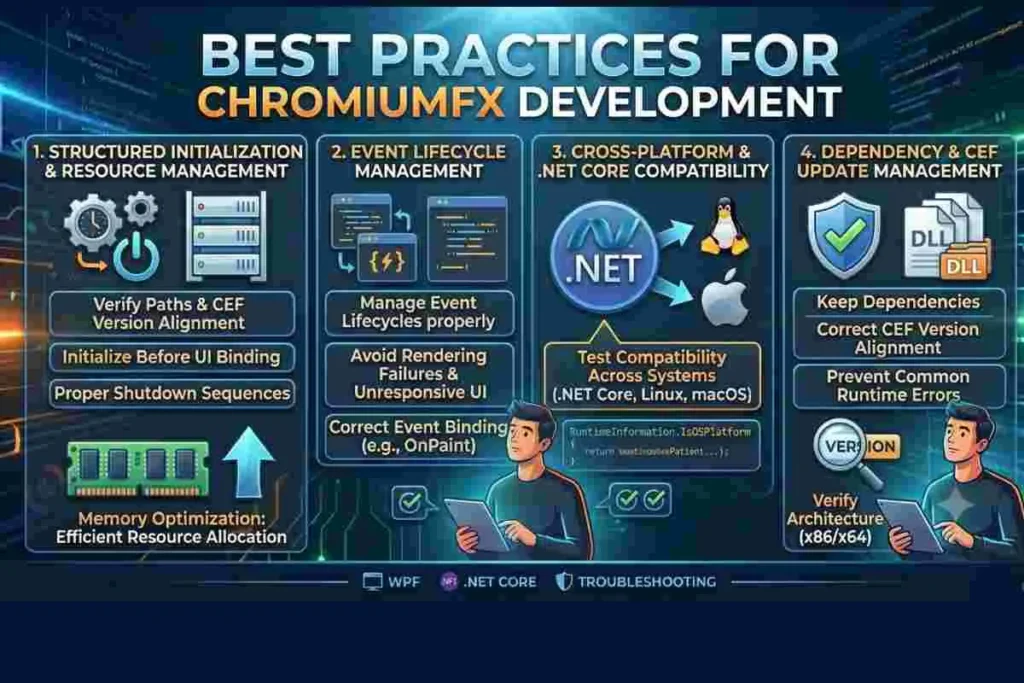
To get the best performance from Chromium FX, developers should follow structured initialization processes and ensure proper resource management. Memory optimization is crucial when handling large web applications inside desktop environments.
It is also important to manage event lifecycles properly to avoid issues like rendering failures or unresponsive UI components.
Developers working with chromium fx net core or cross-platform environments should always test compatibility across systems.
Keeping dependencies updated and aligning with correct CEF versions helps prevent common runtime errors.
Conclusion
ChromiumFX is a powerful solution for embedding Chromium into .NET applications, especially for developers building WPF or WinForms-based hybrid systems. It offers deep control over browser behavior but requires proper setup and technical understanding.
If you need maximum control and flexibility, ChromiumFX is a strong choice. However, for easier implementation, CefSharp or WebView2 may be more suitable.
FAQ’s
What is ChromiumFX used for?
ChromiumFX is used to embed the Chromium browser engine inside .NET applications. It allows developers to build hybrid desktop applications that combine web technologies like HTML, CSS and JavaScript with native software performance.
Is ChromiumFX better than CefSharp?
It depends on the project. ChromiumFX offers more control and flexibility, while CefSharp is easier to use and has better community support. Developers often choose based on complexity and requirements.
Why does ChromiumFX not call the onpaint issue?
This issue usually occurs due to incorrect event initialization or rendering lifecycle problems. Fixing it requires reviewing browser setup and ensuring proper event binding.
Can ChromiumFX be used with .NET Core?
Yes, chromiumfx net core compatibility exists but requires careful configuration. Some setups may need additional dependencies for proper execution.
Does ChromiumFX support Linux?
ChromiumFX mono linux setups are possible but depend on Mono configuration and system compatibility. It is not as straightforward as Windows integration.
What are projects made with ChromiumFX?
Projects include custom browsers, enterprise dashboards, automation tools and internal business applications. Developers also discuss use cases in forums like vbforums.